


China Tightens Summer 2026 Export Rules for Light Industry
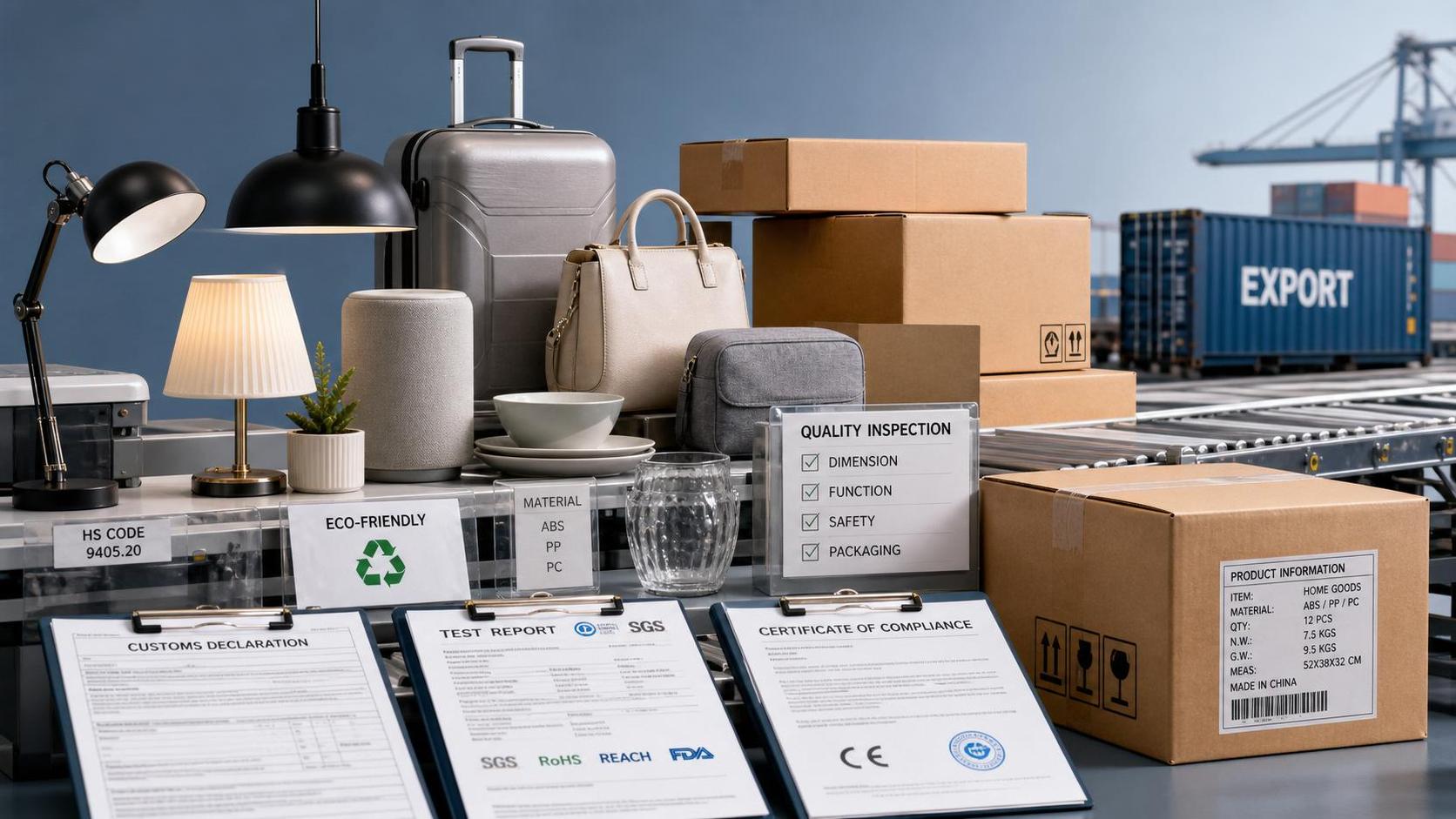
On June 1, 2026, China began implementing new export rules for light industrial goods, with a direct focus on lighting products, home goods, and bags. The change centers on stricter customs classification, raw material compliance, environmental testing, and tariff alignment for destination markets, while also intensifying scrutiny of undervaluation and mixed declarations. This matters not only for exporters, but also for buyers, factories, inspection teams, and supply chain service providers because it affects landed cost calculations, acceptance standards, delivery planning, and supplier selection.
What the new requirements now cover
Confirmed information indicates that the new rules took effect from June 2026 and apply to three product groups: lighting, home goods, and bags. The implementation places emphasis on customs declaration classification, compliance of raw materials, environmental testing, and matching tariff treatment to the requirements of target markets.
The same update also shows closer enforcement against underreported cargo value and mixed declaration practices. In the reported market response, leading factories in major industrial clusters achieved customs clearance pass rates above 98%, while smaller factories without proper qualifications were more frequently exposed to cargo holds and failed tax rebate outcomes.
The adjustment directly affects how overseas buyers assess cost, inspection criteria, lead time reliability, and supplier screening.
Where the pressure is likely to appear first
Export transactions face tighter document consistency checks
Direct exporters are likely to feel the impact first because customs classification, declared value, and product description now carry higher compliance weight. The main pressure points are declaration accuracy, supporting documents, and whether the shipment profile matches the actual product mix. What deserves closer attention is that any gap between commercial documentation and product reality may now create greater clearance and rebate risk.
Factories must link production inputs with export compliance
Manufacturers of lighting, home goods, and bags may be affected through raw material review and environmental testing expectations. From an industry perspective, this means production is no longer only a quality and delivery issue; it is also tied more closely to whether materials and test documentation can support export clearance. Factories with clearer qualification and documentation systems appear better positioned under the new enforcement environment.
Buyers and sourcing teams need to reassess supplier reliability
For overseas buyers and procurement teams, the rule change may reshape supplier evaluation beyond price and sample approval. Analysis shows that sourcing decisions may now need to consider customs compliance capability, documentation readiness, and the supplier's ability to support tariff matching for destination markets. This can influence cost forecasting, pre-shipment review standards, and the credibility of delivery commitments.
Service providers around testing and logistics may face new expectations
Supply chain service providers, including testing-related and clearance-related participants, may see more demand for precise document coordination and compliance support. The likely impact is not simply more paperwork, but stronger pressure to ensure that classification, testing, and shipment files align before export moves into the clearance stage.
What companies should watch in current practice
Check whether classification and product files match shipment reality
Companies involved in lighting, home goods, and bags should pay close attention to whether customs categories, product descriptions, and shipment content are internally consistent. Since the new rules target mixed declarations and undervaluation, even routine export files may require a more careful review before shipment.
Revisit compliance support for materials and environmental testing
Where exports depend on raw material declarations or environmental test records, businesses should closely review whether existing files are complete and usable for actual clearance needs. Observably, the current issue is not only whether testing exists, but whether the supporting records can be connected clearly to the exported goods.
Build more caution into lead time and buyer communication
Because the new rules affect clearance outcomes and tax rebate exposure, exporters and sourcing teams may need to leave more room in delivery planning and buyer communication. It is more appropriate to understand this as an operational control issue: shipment timing, inspection arrangements, and supplier promises may all need stricter internal verification.
Pay closer attention to supplier qualifications
The reported contrast between leading cluster factories and smaller unqualified factories suggests that supplier capability is becoming more visible at the clearance stage. Analysis shows that buyers and trading firms should watch not only production capacity, but also whether suppliers can provide stable compliance documents and support export execution without repeated clearance disruption.
Why this looks like an execution signal, not just a policy note
Observably, this development is better understood as a rule already entering execution rather than a distant policy direction. The fact pattern points to practical enforcement around declaration behavior, materials compliance, testing, and tariff matching, with visible consequences in customs clearance and tax rebate outcomes.
At the same time, it would be premature to treat all operational implications as fully settled. From an industry perspective, continued attention is still needed on how enforcement language, compliance interpretation, and market practice develop in day-to-day transactions.
How the market should read this stage
The most balanced reading is that the new export rules have already raised the compliance threshold for three light industry categories, while the full operating rhythm of implementation still deserves close observation. For exporters, factories, and buyers, the immediate significance lies in stronger alignment between product reality, customs filing, test support, and supplier qualifications.
Rather than viewing this only as a broad regulatory headline, it is more appropriate to understand it as an applied trade and delivery signal. The near-term issue is execution quality, and the medium-term issue is how consistently market participants can adapt their sourcing, compliance, and shipment processes to the new standard.
Basis of this article and what still needs verification
This article is generated based on the user-provided news title, event date, and event summary. The confirmed basis includes the implementation timing of June 2026, the covered product groups, the focus on customs classification, raw material compliance, environmental testing, destination-market tariff alignment, stricter action against undervaluation and mixed declarations, the reported customs clearance performance of leading factories, the difficulties faced by smaller unqualified factories, and the stated impact on overseas buyer decision-making.
For this type of development, source categories typically relevant to later verification include official notices, releases from regulatory authorities, customs or trade administration information, industry association updates, standard-setting documents, and reporting by authoritative trade media. No specific official source link was provided in the input, so direct official references still need to be checked. What also remains worth monitoring is any further detail on implementation interpretation, compliance review standards, tender or procurement document changes, industry feedback, and how companies execute under the new rules in practice.
Related Posts
CONTACT US

First class quality service and professional after-sales team.
Get in Touch
*We respect your confidentiality and all information are protected.