


EU Ends Low-Value VAT Relief on July 1
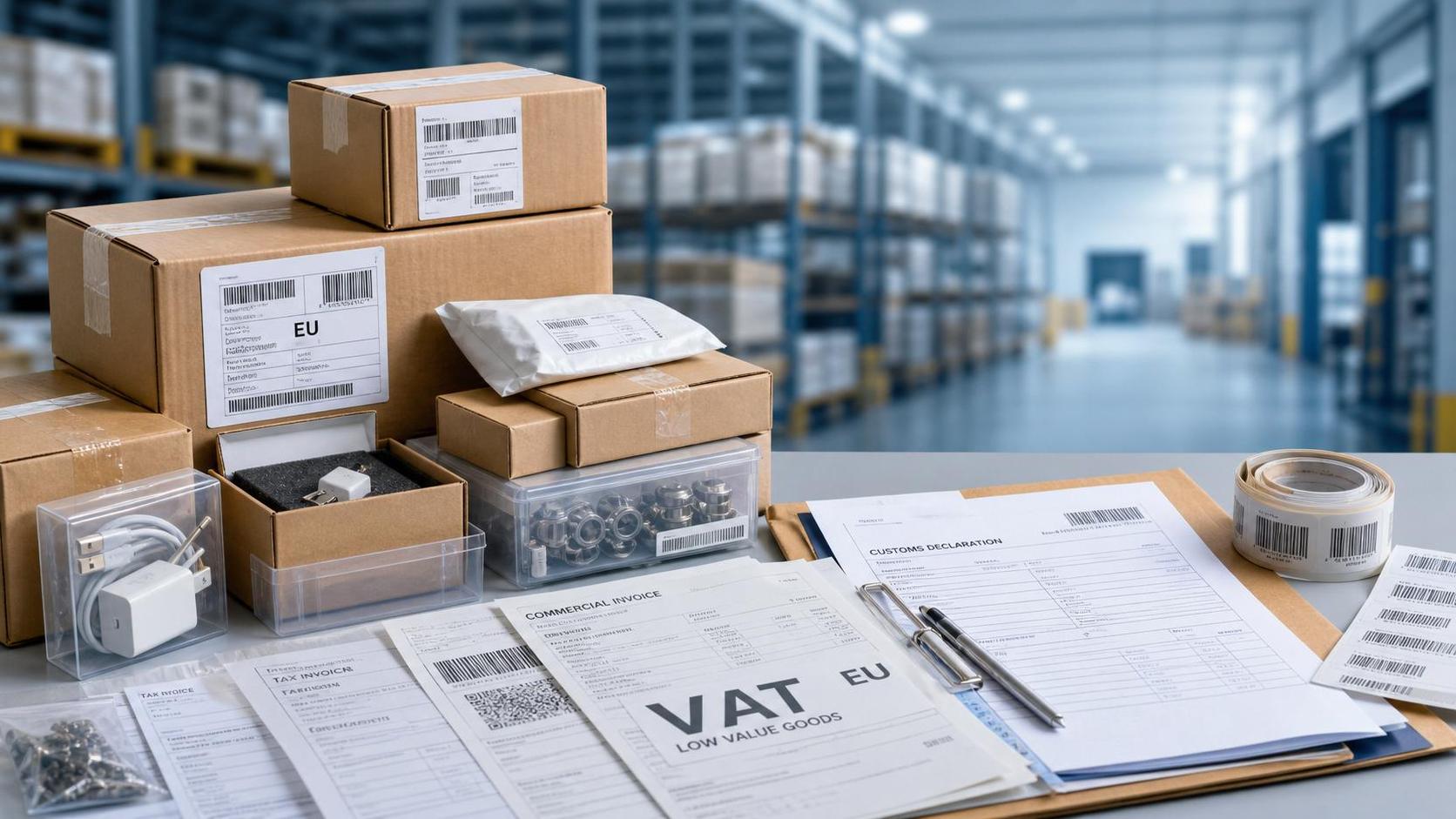
On July 1, 2026, the EU will end VAT relief for imported parcels valued at €150 or below, requiring full declaration and tax payment at the destination country’s rate. For cross-border trade, this is not just a tax adjustment: it directly affects landed cost calculations, retail pricing, customs compliance, and delivery arrangements for smaller importers, distributors, e-commerce channels, and exporters using direct-mail models, especially in light industrial goods, electronic accessories, and small auto parts sold into B2C markets.
What the rule change confirms
The confirmed change is that, from 2026-07-01, imported low-value parcels with a value of €150 or less will no longer benefit from VAT exemption in the EU. These goods must be fully declared and taxed according to the VAT rate of the destination country. The change has been formally announced by the EU and applies to low-value imports rather than only to selected product categories.
The information provided also makes clear that the policy change is expected to affect cost structures and pricing strategies for small and medium-sized importers, distributors, and e-commerce channels. It also creates compliance and quotation pressure for Chinese suppliers that rely on direct shipping for B2C sales of light industrial products, electronic accessories, and small automotive components.
Where the pressure is likely to appear first
Direct-mail export models face immediate pricing friction
From an industry perspective, exporters using direct-to-consumer parcel shipping are likely to feel the impact first because VAT can no longer be left outside the pricing logic for low-value shipments. The main pressure points are product quotation, tax-inclusive pricing presentation, shipment declaration accuracy, and the alignment between order value and final customer payment expectations.
Importers and distributors need tighter cost and declaration control
For importers and downstream distributors, the change matters because tax treatment now becomes a more visible part of unit economics even for smaller consignments. The affected business steps include import cost planning, invoice review, customs declaration coordination, and resale pricing. What deserves closer attention is whether existing documentation, order processing, and landed-cost calculations are still fit for destination-based VAT treatment across different EU markets.
E-commerce channels may need to revisit checkout and fulfillment logic
E-commerce operators are likely to be affected at the point where tax, product price, and delivery promise meet. Analysis shows that the relevant operational links include front-end pricing display, order settlement, shipment routing, and customer communication on import charges. Where the business depends on low-value direct shipments, the rule change raises the importance of consistency between declared value, charged price, and tax handling.
Supply-chain service providers will face higher documentation sensitivity
Logistics and cross-border fulfillment providers may also see more attention on declaration completeness and handoff accuracy. While the input does not provide execution details, observably the change increases the practical importance of customs data quality, shipment records, and coordination between sellers, intermediaries, and import-side operators.
What companies should review now
Recheck tax assumptions in quotations and procurement plans
Analysis shows that companies should reassess whether current quotation methods still reflect destination-country VAT treatment for low-value parcels. This is particularly relevant for product lines where price competitiveness depends on narrow margins and high shipment frequency.
Review documents used for declaration and order fulfillment
What deserves closer attention is the quality and consistency of commercial documents tied to low-value shipments, including declared value records and order-related paperwork. Even without detailed implementation guidance in the input, businesses should treat document accuracy as a core compliance issue rather than a back-office formality.
Track category-specific pressure in B2C goods
The provided information specifically points to light industrial goods, electronic accessories, and small automotive parts sold through B2C channels. Observably, companies in these categories should focus on whether tax changes alter final pricing, channel viability, or delivery arrangements more quickly than in other product groups.
Monitor follow-up guidance before treating outcomes as settled
The announced change is clear on the end of the relief and the requirement for full declaration and taxation, but the input does not provide detailed operational guidance. It is therefore more appropriate to monitor subsequent official wording, implementation practice, and market responses before assuming a uniform execution outcome across all business models.
Why this matters beyond a tax headline
Analysis shows that this development is better understood as a rule change with operational consequences, not merely a fiscal update. It signals that low-value cross-border parcel trade into the EU will be judged more directly through destination-based tax compliance, which can affect how sellers structure orders, how channels present prices, and how import-side parties manage declarations.
Observably, the most important issue is not only the tax burden itself but also how uneven VAT rates across destination markets can reshape price comparisons and fulfillment choices. That is why the industry will need to keep watching for practical interpretation, documentation expectations, and channel-level adjustments rather than treating the announcement as a purely formal policy notice.
How this update is best understood at this stage
At this stage, the announcement is best understood as a confirmed policy change with direct implications for compliance, pricing, and cross-border parcel execution. It is not yet a complete picture of every operational outcome, but it is a clear signal that businesses relying on low-value shipments into the EU should revisit tax treatment, declaration processes, and customer-facing pricing logic without delay.
From an industry perspective, the key significance lies in the shift from low-value relief toward fuller destination-country VAT accountability. The practical market effect will still depend on execution details and business adaptation, so a measured and evidence-based response remains more appropriate than broad conclusions.
Basis of this article
This article is generated based on the user-provided news title, event date, and event summary. For developments of this type, commonly relevant source categories may include official announcements, regulator releases, customs or trade authority information, industry association updates, standards-related documents, and reporting by established media. A specific official source link was not provided in the input, so it still needs to be verified on an ongoing basis.
Further observation is still needed on implementation details, practical compliance interpretation, possible category-level execution differences, documentation expectations, market feedback, and how affected companies adjust their pricing and delivery models after the rule takes effect.
Related Posts
CONTACT US

First class quality service and professional after-sales team.
Get in Touch
*We respect your confidentiality and all information are protected.