


U.S. Tightens Import Filing Rules Under New Customs Order
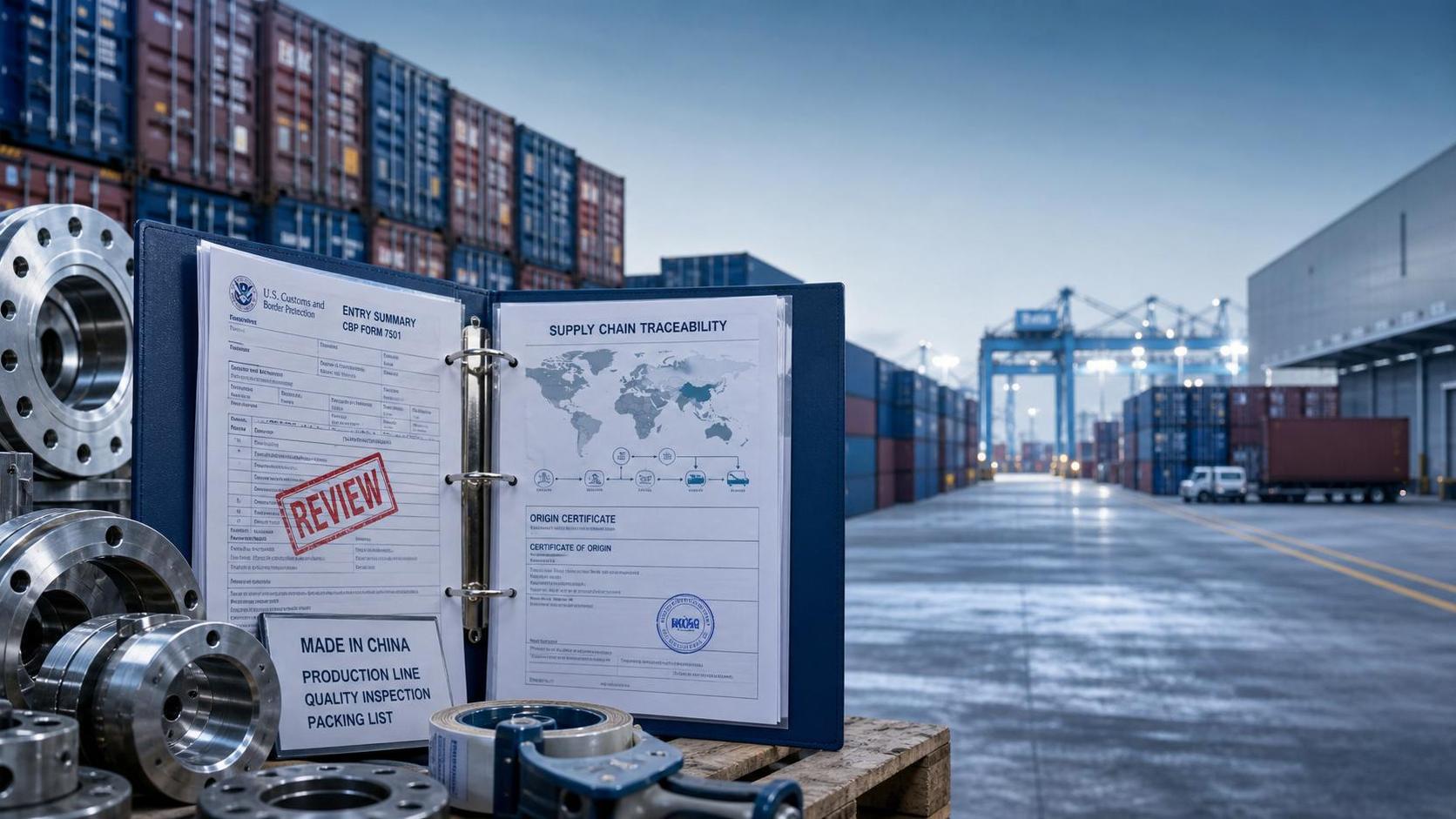
On June 3, 2026, the United States signed an executive order titled Strengthening Customs Enforcement, signaling a sharper compliance threshold for all entities importing into the U.S. The measure requires more complete pre-declaration information, including company qualification codes and full-chain production details for goods, making it particularly relevant for exporters, manufacturers, customs teams, and supply chain service providers involved in industrial products such as heavy components. For the market, the significance lies not only in stricter filing expectations, but also in the likely effect on documentation workflows, origin verification, and shipment timing.
What the June 3 Order Confirms
According to the provided information, the executive order was signed on June 3, 2026. From the date of implementation, all entities importing into the United States will be required to submit complete materials before filing, including company qualification codes and detailed records covering the full production chain of the goods.
The same information states that missing or inaccurate declaration data may result in administrative and criminal penalties. It also states that supporting implementation rules will be issued within 90 days and that customs data traceability channels between countries will be connected.
The policy is described as directly affecting global suppliers' export compliance preparation for the U.S. market, document management, and delivery timelines, with particular relevance for industrial goods exporters such as heavy parts suppliers that depend on origin certification, supply chain transparency, and responsive customs clearance processes.
Where the Pressure May Appear Across the Supply Chain
Exporters facing deeper pre-filing scrutiny
From an industry perspective, direct trade companies shipping to the U.S. may be affected first because the order points to a higher documentary threshold before goods are declared. The immediate pressure is likely to center on whether exporter records, supplier credentials, and production-chain information can be assembled in a complete and consistent format before filing begins.
Manufacturers and processors under stronger traceability expectations
Analysis shows that processing and manufacturing businesses may feel the impact through upstream documentation control. Where goods pass through multiple production stages, the requirement for full-chain production details raises the importance of internal recordkeeping, origin support files, and cross-department coordination between procurement, production, and export compliance teams.
Customs, logistics, and service providers managing timing risk
Supply chain service providers, including customs support and logistics coordination roles, may be affected because filing readiness becomes more dependent on document completeness before shipment release moves forward. What deserves closer attention is the possibility that incomplete or inconsistent information could slow customs response times and place more pressure on document review, exception handling, and delivery scheduling.
Industrial goods suppliers with complex origin documentation
For exporters of heavy parts and other industrial products, the policy may carry added operational weight because these goods often rely on clear origin proof and transparent production records. Observably, the issue is not only whether goods can be shipped, but whether the supporting compliance package can withstand closer review when customs traceability expectations increase.
What Companies Should Watch Before Detailed Rules Arrive
Monitor the next 90 days closely
What deserves closer attention is the follow-up rulemaking period referenced in the summary. The executive order sets the direction, but the practical burden on importers and suppliers will depend on how the supporting rules define filing scope, document formats, verification standards, and enforcement procedures.
Review document completeness, not just document presence
Analysis shows that companies should focus not only on whether they hold origin and production documents, but also on whether those materials can be matched consistently across declarations, supplier records, and shipment files. This is especially relevant where multiple suppliers or production stages are involved.
Prepare for longer compliance lead times
From an industry perspective, businesses serving the U.S. market may need to reassess internal timelines for compliance preparation, document collection, and customs response. The order points to a process in which filing readiness could become a scheduling issue, not simply a paperwork issue.
Align customer communication with compliance uncertainty
Observably, companies may also need to separate confirmed requirements from still-pending implementation details when communicating with U.S. customers, distributors, or service partners. That distinction matters because the executive order is already a policy signal, while some operational consequences still depend on the forthcoming detailed rules.
How This Policy Signal Should Be Read Now
Analysis shows that this development should not be read only as a short-term filing adjustment. It also signals stronger emphasis on traceability, verifiable origin information, and cross-border data consistency in U.S.-bound trade compliance.
At the same time, it is more appropriate to understand this as a developing regulatory direction rather than a fully settled operating framework, because the supporting rules are still to be issued within 90 days. That means the compliance signal is already clear, but the exact execution standard still requires continued observation.
Why the Market Will Keep Watching This
For industry participants, the immediate meaning of the June 3 order is that U.S. import declarations are moving toward tighter pre-filing verification and stronger consequences for incomplete or inaccurate information. The broader significance is that supply chain transparency and document readiness may become more central to export execution, especially for industrial goods with complex sourcing and origin chains.
Current conditions make it more appropriate to understand this as both a near-term compliance change and a longer-term signal on trade documentation expectations. The core direction appears clear, while the practical burden on different business roles still needs to be assessed against the detailed rules once released.
Basis of This Article
This article is based on the user-provided news title, event date, and event summary. The information available for writing is limited to the stated executive order, its date, the listed filing requirements, the mentioned penalties, the 90-day rulemaking timeline, the planned customs data traceability connection, and the described relevance to exporters and industrial goods supply chains.
For this type of development, source categories that are commonly relevant include official government announcements, company compliance notices, industry association updates, authoritative media reports, and standards or regulatory documents. No specific official source link was provided in the input, so the exact source document still requires ongoing verification. Continued attention should focus on the detailed rules to be issued within 90 days and on how filing, traceability, and enforcement requirements are defined in practice.
Related Posts
CONTACT US

First class quality service and professional after-sales team.
Get in Touch
*We respect your confidentiality and all information are protected.