


EU Requires 2026 ECE R100 Approval for Truck Parts
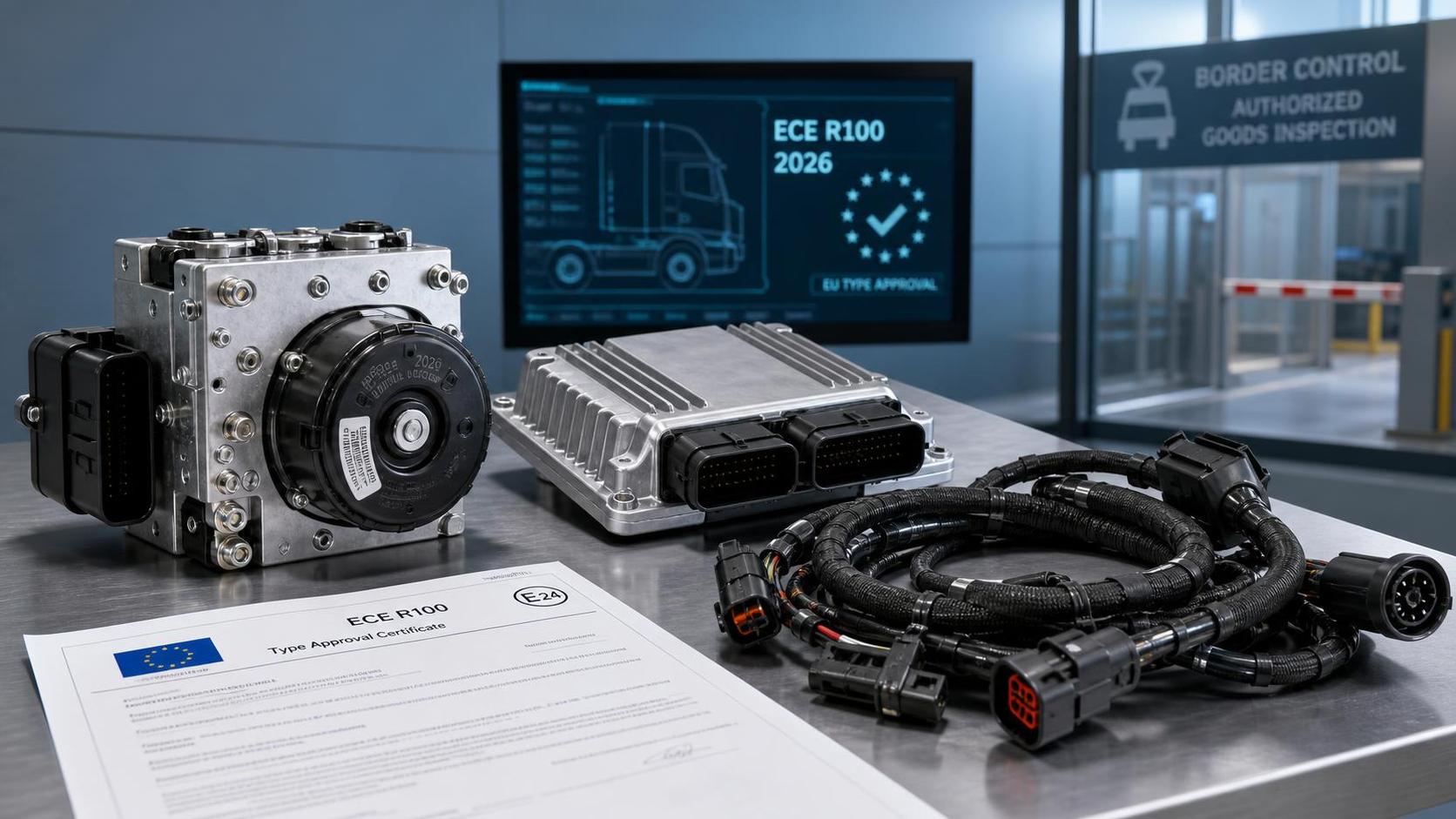
From July 24, 2026, the EU has begun enforcing an updated version of the ECE R100 electromagnetic compatibility certification requirements for vehicle electronic systems, making approval mandatory for newly imported electronic control parts used in heavy-duty trucks. The change matters most to exporters, component manufacturers, importers, and supply-chain teams handling products such as ABS modules, ECUs, and wiring harness assemblies, because non-certified goods can now be stopped at the EU border rather than addressed later in the sales process.
What Has Taken Effect at the Border
According to the information provided, the updated ECE R100 requirements took effect on July 24, 2026 and apply to all newly imported heavy-duty truck electronic control components entering the EU market.
The covered product scope includes parts such as ABS modules, ECUs, and wiring harness assemblies.
The updated rules add higher radio-frequency immunity testing requirements and introduce verification related to CAN FD compatibility in in-vehicle networks.
Products that do not obtain the required certification will be refused entry by EU border customs.
Where the Pressure Will Be Felt First
Export-facing component suppliers will face a compliance timing issue
From an industry perspective, suppliers that sell heavy-duty truck electronic parts into the EU may be affected first because the rule is tied directly to import eligibility. The immediate pressure is likely to appear in product qualification, certification scheduling, and shipment release planning. What deserves closer attention is whether existing export preparations fully account for the new testing and verification items before goods are dispatched.
Manufacturing and engineering teams may need to revisit validation workflows
Analysis shows that manufacturers of ABS modules, ECUs, wiring harness assemblies, and similar control-related parts may see the impact in pre-shipment technical validation. The issue is not only whether a product is commercially ready, but whether it is supported by compliance work aligned with the updated RF immunity and CAN FD verification requirements. For these teams, the main concern is the added burden on preparation cycles and certification-related coordination.
Importers and channel operators face higher document-control risk
Companies responsible for customs entry, regional distribution, or delivery commitments may be affected because the consequence of non-compliance is border refusal. Observably, this shifts part of the operational risk from downstream handling to pre-import document readiness. The practical focus is likely to be on certificate completeness, product traceability in shipment documentation, and communication with upstream suppliers before cargo moves.
Supply-chain service providers may need earlier compliance visibility
Logistics coordinators, sourcing teams, and other service providers linked to EU-bound heavy truck parts may also be affected. Their exposure comes from tighter dependence on whether certification is already in place before transportation and customs stages begin. What deserves closer attention is whether project timelines, booking arrangements, and customer delivery expectations have been adjusted to reflect longer compliance preparation and potentially higher certification costs.
What Companies Should Watch Now
Separate confirmed requirements from internal assumptions
The confirmed facts are clear: the updated ECE R100 requirements are in force, they apply to newly imported heavy-duty truck electronic control parts, and non-certified products can be refused entry. Analysis shows that companies should avoid treating internal interpretations or customer-side expectations as a substitute for formal compliance preparation.
Review high-risk product categories first
What deserves closer attention is the product groups explicitly tied to electronic control functions, including ABS modules, ECUs, and wiring harness assemblies. For companies with broad export portfolios, these categories are likely to require priority review in technical files, certification status tracking, and shipment release procedures.
Reassess delivery schedules and customer communication
Observably, the rule change affects more than testing activity alone. It may alter order timing, export readiness, and delivery coordination. Companies involved in EU trade should pay close attention to whether customer commitments, lead-time assumptions, and customs-facing documents reflect the new certification threshold now required for market entry.
Keep watching for later clarification in implementation practice
Analysis shows that businesses should continue monitoring how the rule is described in official notices, border practice, and related compliance communications. The policy signal is already clear, but the day-to-day execution burden for different product types may still require ongoing verification in actual business workflows.
Why This Looks Like More Than a Short-Term Adjustment
Observably, this is not just a temporary paperwork change. The update links market access for heavy-duty truck electronic control parts to more specific technical verification, including stronger RF immunity testing and CAN FD compatibility checks. That makes the development more appropriate to understand as an immediate compliance requirement with longer-term operational implications for exporters serving the EU.
At the same time, analysis shows it should not be overstated beyond the confirmed facts. The information provided supports a clear conclusion on import access conditions, but broader competitive outcomes, market share shifts, or industry restructuring are not established by the current input alone.
How the Industry May Need to Frame This Development
At this stage, the most reasonable reading is that the EU rule has already created a concrete entry condition for newly imported heavy-duty truck electronic control parts, rather than a distant policy signal. For the industry, the significance lies in compliance timing, technical verification scope, and border enforceability. It is more appropriate to understand this as an implemented regulatory threshold with continuing operational implications, rather than as a general policy trend that can be addressed later.
Basis of This Article
This article is based on the user-provided news title, event date, and event summary regarding the EU's enforcement of the updated 2026 ECE R100 requirements for newly imported heavy-duty truck electronic control parts.
For this type of industry development, commonly relevant source categories may include official announcements, company statements, industry association updates, authoritative media coverage, and standard-related documents. No specific official source link was provided in the input, so the exact underlying publication path still needs ongoing verification.
Further attention should remain on any subsequent official clarifications, practical customs enforcement details, and additional compliance guidance related to affected heavy-duty truck electronic components.
Related Posts
CONTACT US

First class quality service and professional after-sales team.
Get in Touch
*We respect your confidentiality and all information are protected.