


Canada Imposes 10% Tariff on Imported Canned Vegetables
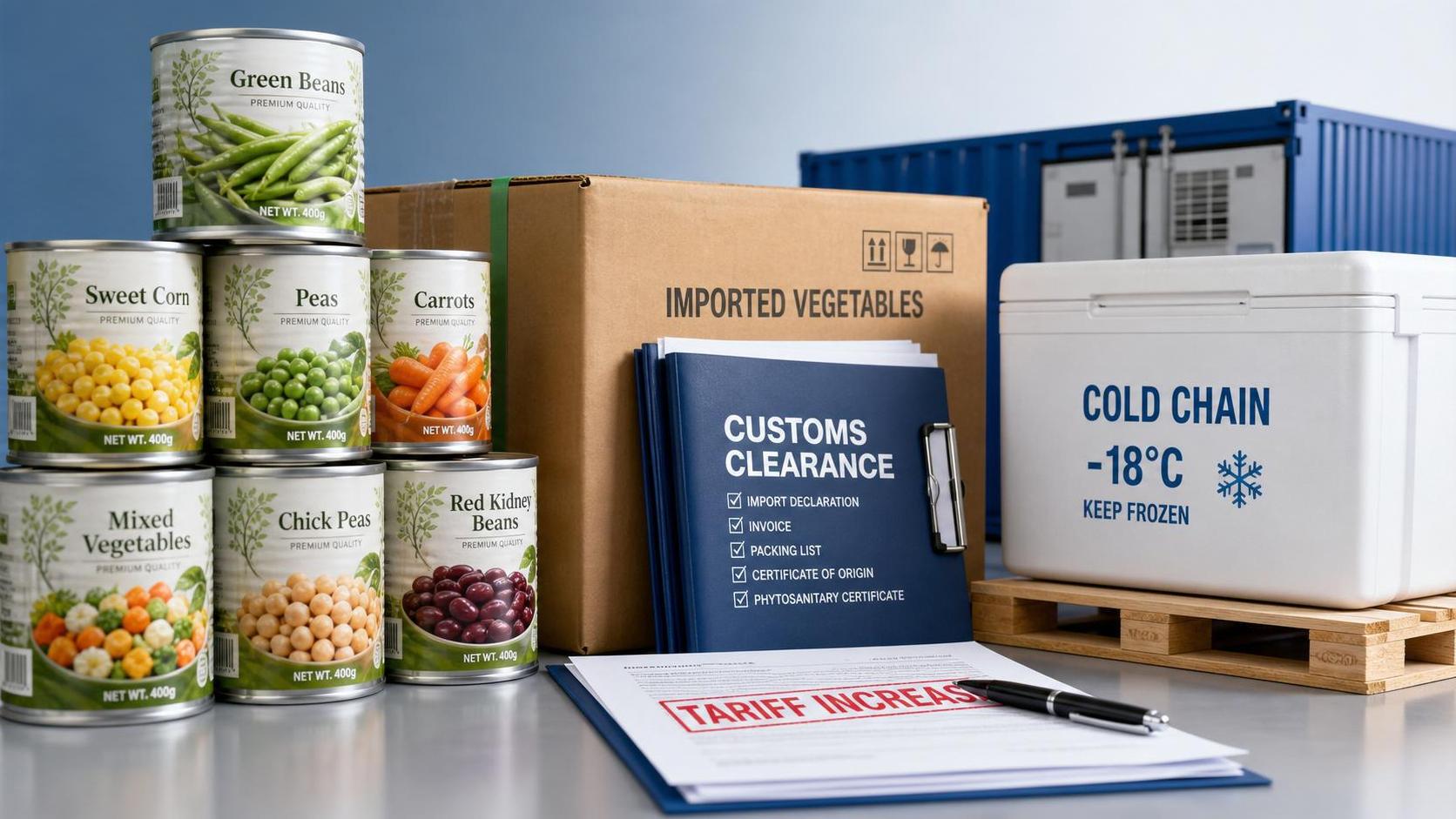
On June 19, 2026, the Canadian federal government announced an immediate 10% temporary tariff on imported canned vegetables worldwide. For the market, this is not just a pricing change but a trade-rule adjustment that directly affects food importers, customs preparation, and downstream distribution decisions. It also deserves close attention from companies tied to food packaging, canning equipment, cold-chain logistics, and cross-border food trade, because the measure signals a need to reassess supply-chain coordination and pricing strategy.
A trade measure with immediate cost and clearance implications
The confirmed facts are limited but clear. The measure took effect on June 19, 2026, when the Canadian federal government announced an immediate 10% temporary tariff on imported canned vegetables from all global sources. The stated purpose is to protect Canada’s domestic vegetable processing industry. Based on the information provided, the measure raises procurement costs for importers, lengthens compliance preparation for customs clearance, and may lead to price adjustments further down the distribution chain. The same information also indicates that overseas suppliers and partners involved in food packaging, canning equipment, cold-chain logistics, and cross-border food trade are likely to treat this as a signal to review supply and pricing arrangements.
Where the pressure is likely to appear across the chain
Importers face the first operational impact
From an industry perspective, direct importers are the first group exposed to the rule change because the tariff applies at the point where landed cost and clearance preparation matter most. The likely pressure points are customs documentation, internal cost calculation, and timing for shipment release. What deserves closer attention is whether existing purchasing terms, product classifications, and clearance files are still aligned with the new tariff burden in day-to-day transactions.
Distributors and channel operators may need to revisit pricing flow
Analysis shows that downstream distributors and channel operators could feel the effect through revised transfer prices and inventory decisions rather than through the tariff itself. If import costs rise, the practical issue becomes how quickly pricing changes move through supply agreements, stock planning, and customer quotations. For these businesses, the main concern is not only margin pressure but also whether delivery commitments and commercial terms remain workable under the updated cost structure.
Cross-border service providers are drawn into compliance timing
Companies supporting customs handling, logistics coordination, and cold-chain movement may also be affected because longer compliance preparation can alter shipment scheduling and handoff efficiency. Observably, even when the rule targets a specific imported product category, the operational burden often extends to document readiness, coordination windows, and communication between trading parties. For service providers, the immediate issue is whether current workflows can absorb slower compliance preparation without disrupting delivery expectations.
Upstream partners receive a pricing and planning signal
For overseas suppliers linked to food packaging, canning equipment, and cross-border food business, the change does not automatically create a direct regulatory obligation based on the information provided, but it does send a commercial signal. It is more appropriate to understand this as a trigger for reviewing quotations, order pacing, and customer discussions, especially where business planning depends on stable import cost assumptions in Canada.
What companies should watch in the near term
Review cost assumptions against current trade documentation
Because the tariff is described as immediate and temporary, companies should first verify whether their current landed-cost models, commercial paperwork, and customs preparation processes properly reflect the new duty exposure. This is especially relevant for transactions already in progress, where pricing, shipment timing, and clearance preparation may no longer match earlier assumptions.
Track how compliance preparation affects delivery schedules
The information provided states that compliance preparation for customs clearance may take longer. Analysis shows that this makes timing a practical issue, not just a legal one. Businesses should therefore pay attention to whether document completion, internal review, and handover between importer, broker, and logistics parties require adjustment before delivery plans are finalized.
Reassess downstream pricing and contract communication
Since the measure may trigger price adjustments in distribution, companies should closely monitor how cost changes are communicated through customer quotations, reseller terms, and supply discussions. What deserves closer attention is not the assumption of a final market outcome, but the need to avoid a gap between updated import costs and existing sales commitments.
Continue watching for official clarification and execution details
The input does not provide detailed implementation language beyond the announced tariff and its immediate effect. For that reason, companies should treat execution details, interpretive guidance, and any later clarification as items still requiring verification. This includes how the measure is applied in practice, how documentation expectations are expressed, and whether related business documents need to be updated.
Why this matters beyond the headline
Observably, this development matters less as a standalone headline and more as an execution signal. The key point is that a temporary tariff can quickly change the working assumptions behind procurement, customs preparation, and distribution pricing, even before broader market reactions become visible. Analysis shows that the industry should not overstate the measure as a fully settled long-term shift, but it should recognize that the rule is already relevant for operational decisions where shipments, pricing, and supply coordination are time-sensitive.
How this update is best understood now
At this stage, it is more appropriate to understand the June 19 measure as an already effective trade-rule change with immediate operational consequences, while many practical implications still require observation. The confirmed impact is centered on higher importer cost exposure, longer compliance preparation for clearance, and possible downstream price adjustment. The broader significance lies in how companies across trade, logistics, packaging, and food-related supply networks respond to that change in execution rather than in any unverified market conclusion.
Basis of this article and what still needs verification
This article is based on the user-provided news title, event date, and event summary. For developments of this kind, relevant source types usually include official government announcements, regulator publications, customs or trade authority notices, industry association updates, standard-setting documents, and reporting by established news outlets. No specific official source link was provided in the input, so the exact official reference still needs to be verified. It also remains necessary to continue checking later policy details, enforcement wording, customs practice, tender or procurement document changes, market feedback, and how affected companies implement their response in practice.
Related Posts
CONTACT US

First class quality service and professional after-sales team.
Get in Touch
*We respect your confidentiality and all information are protected.