


EU Rule Takes Effect: ECE R140 Approval Required for Heavy Vehicle Parts Imports
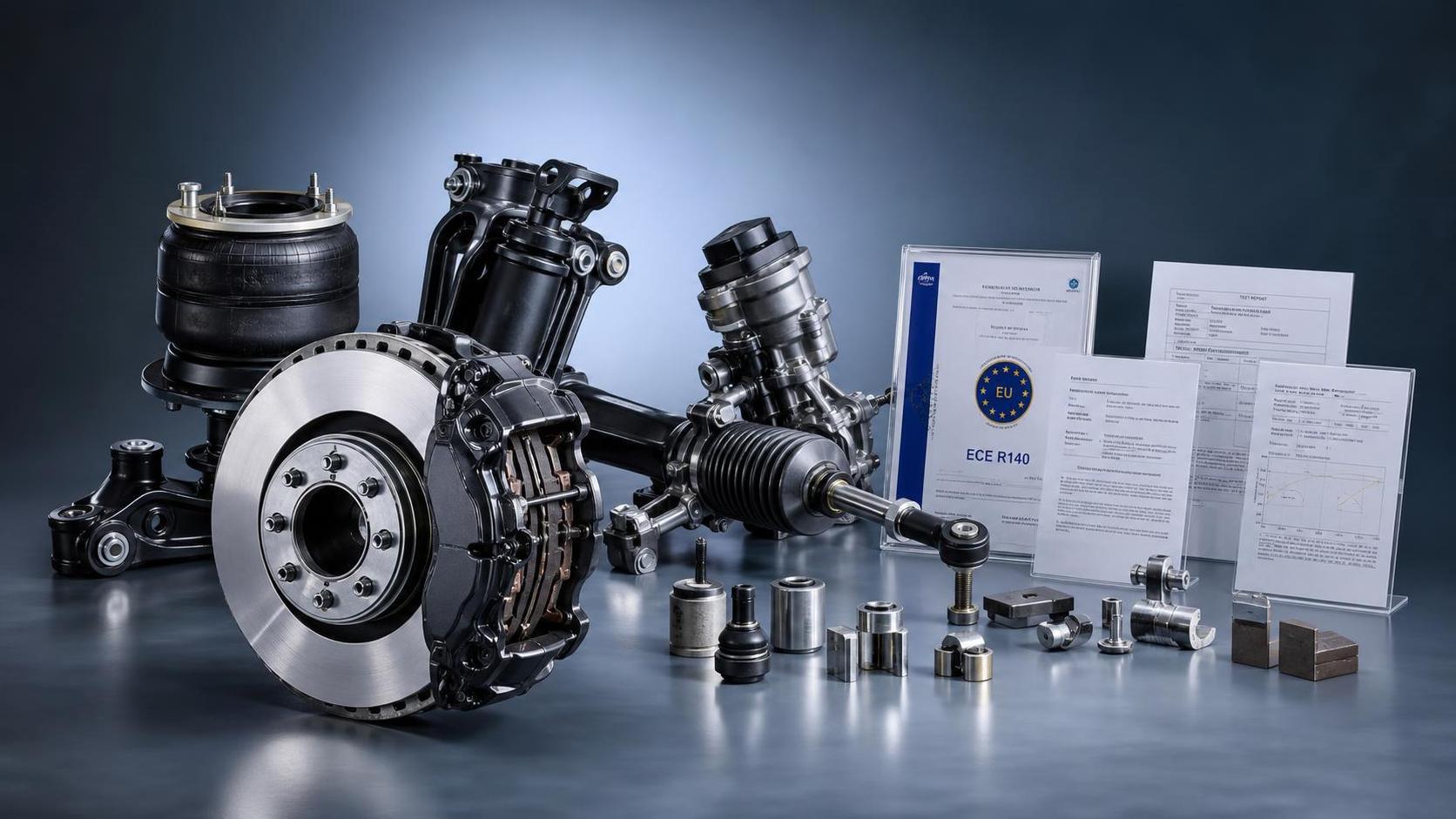
On July 23, 2026, the European Commission put Regulation (EU) 2026/1187 into effect, making ECE R140 type approval a mandatory market-entry requirement for heavy commercial vehicle parts imported into the EU. The change applies to products such as braking systems, suspension components, and steering assemblies, and it links customs access to both certification status and a CoC issued by an EU-authorized technical service body. For exporters, buyers, supply chain operators, and compliance teams, this is worth close attention because it shifts import eligibility from a commercial arrangement to a document-backed regulatory condition.
What the rule now requires at the border
According to the information provided, all heavy commercial vehicle parts entering the EU market from July 23, 2026 must complete ECE R140 type approval before import. The requirement covers parts including braking systems, suspension components, and steering devices. A CoC issued by an EU-authorized technical service institution must accompany the certified product. The certification scope includes material compliance, durability testing, and baseline cybersecurity requirements. Products without the required certification will be refused entry by member state customs authorities.
Where the pressure is likely to appear across the chain
Export shipments now depend on certification readiness
From an industry perspective, exporters of heavy commercial vehicle parts are likely to feel the most immediate impact because import acceptance is now tied to completed type approval and supporting documentation. The affected business link is not only product development, but also shipment release, customs preparation, and delivery scheduling. What deserves closer attention is whether each product line intended for the EU is matched with the required ECE R140 approval status and the corresponding CoC documentation before dispatch.
Procurement and sourcing teams face a stricter supplier screen
For buyers and sourcing teams, the rule change means supplier qualification can no longer rely only on price, lead time, and technical fit. Analysis shows that procurement decisions for EU-bound heavy vehicle parts will increasingly need to consider whether suppliers can demonstrate certification progress, document completeness, and product-level compliance coverage in the areas explicitly mentioned in the rule summary. This can affect ordering cycles, replacement sourcing, and the acceptance of incoming parts for EU programs.
Manufacturing and quality functions need closer document control
Manufacturers serving EU customers may be affected through testing coordination, technical file preparation, and internal quality review. Observably, the inclusion of material compliance, durability testing, and baseline cybersecurity requirements means the compliance burden is not limited to a single lab result or declaration. The practical impact is likely to fall on how engineering, quality, and export documentation teams align product specifications with certification evidence and shipment records.
Certification and trade service participants may see workflow changes
Certification-related service providers, testing support teams, and trade execution operators may also face tighter timing expectations. The reason is straightforward: once customs refusal becomes the consequence of missing approval, document sequencing and file accuracy become part of delivery risk. Companies involved in clearance, document review, or shipment coordination should pay attention to how CoC availability is integrated into export release procedures.
Practical points companies should monitor now
Check which product categories are exposed first
Analysis shows that companies should first identify which heavy commercial vehicle part categories in their EU business fall within the rule scope described in the provided summary, especially braking, suspension, and steering-related products. This matters because the compliance question is no longer abstract; it directly affects whether a shipment can enter the market.
Review certification and CoC preparation together
What deserves closer attention is the linkage between type approval and the CoC issued by an EU-authorized technical service body. Even where a company has already been preparing for technical compliance, the operational risk may still sit in document completeness, issuance timing, and the handoff between certification records and export paperwork. Since the provided information does not include more detailed implementation procedures, this should be treated as a monitoring point rather than an assumed settled process.
Adjust delivery planning and customer commitments cautiously
Observably, the summary directly points to effects on delivery rhythm and compliance cost for Chinese exporters of heavy-duty parts. Companies with active EU orders may therefore need to reassess shipment timing, contract delivery assumptions, and buffer planning around certification completion. This is not proof of a uniform market-wide delay, but it is a clear signal that delivery planning now depends more heavily on regulatory readiness.
Track downstream document requests and bid-language changes
From an industry perspective, another area to watch is how this requirement appears in purchase specifications, tender documents, incoming quality clauses, and after-sales traceability requests. The input does not provide those downstream details, so it would be premature to describe a fixed market practice. Still, companies should monitor whether customers begin requesting clearer proof of ECE R140 approval status and CoC availability earlier in the sales or order-confirmation process.
Why this should be read as an execution signal
Analysis shows that this development is better understood as a rule now tied to market access rather than as a distant policy discussion. The key point is not only that a regulation exists, but that uncertified products may be refused entry by customs authorities in member states. At the same time, it remains necessary to observe how execution language, certification interpretation, and market-side documentation expectations develop in practice, because the provided information does not include fuller operational detail beyond the core requirement.
How to read the change at this stage
At this stage, it is more appropriate to understand the development as a landed compliance condition for EU imports of heavy commercial vehicle parts, with immediate relevance for exporters, procurement teams, certification workflows, and delivery planning. The confirmed facts already indicate a concrete shift in entry requirements. The broader commercial effect, however, still needs to be assessed through subsequent implementation practice, customer documentation behavior, and industry feedback rather than assumed in advance.
Basis of this article and what still needs verification
This article is based on the user-provided news title, event date, and event summary. For developments of this kind, commonly relevant source categories may include official announcements, regulator publications, customs or trade authority information, industry association notices, standards organization documents, and reporting by established industry media. No specific official source link was provided in the input, so the exact official reference path still needs to be verified on an ongoing basis. It remains necessary to continue monitoring detailed implementation language, certification practice, documentation expectations, tender wording changes, industry feedback, and how companies are executing against the requirement.
Related Posts
CONTACT US

First class quality service and professional after-sales team.
Get in Touch
*We respect your confidentiality and all information are protected.