


China Tightens Ammonium Sulfate Export Checks
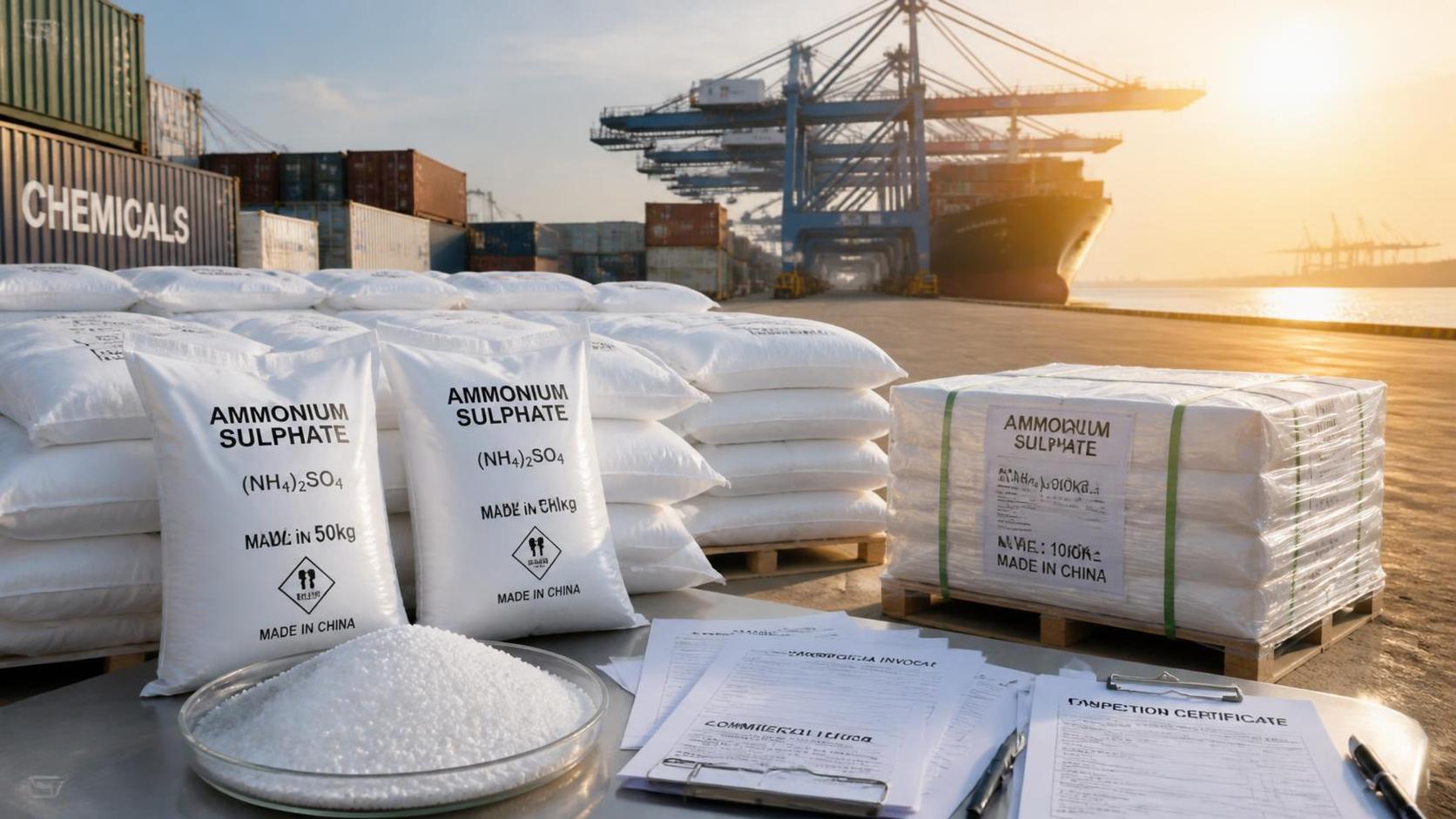
On July 16, 2026, China’s General Administration of Customs added regulatory condition "B" to exported ammonium sulfate, including HS code 2804290010, bringing the product under mandatory export commodity inspection. From an industry perspective, this change is most relevant to fertilizer exporters, chemical raw material suppliers, and the overseas distributors, importers, and blending plants that depend on stable cross-border shipments and document readiness.
What the customs change covers
The confirmed adjustment took effect on July 16, 2026. China Customs formally applied regulatory condition "B" to exported ammonium sulfate, with HS code 2804290010 included in the scope cited in the information provided. The measure means the product is subject to export commodity inspection before clearance.
The only confirmed facts available here are the date of implementation, the product category, the HS code reference, and the fact that mandatory inspection has been introduced for export shipments. No additional official details were provided in the input.
Where the impact is likely to show up
Exporters may face tighter clearance timing
Direct exporters of fertilizer and chemical raw materials are the first group likely to feel the effect. The practical issue is not only compliance, but also the sequencing of declaration, inspection, and shipment release. Any added inspection step can affect lead times and requires more disciplined preparation of export documents.
Downstream buyers need steadier supply planning
Overseas distributors, importers, and blending plants tied to agricultural supply chains may need to reassess supplier file completeness and delivery stability. For these buyers, the main exposure is interruption in planned replenishment rather than product demand itself. That makes shipment predictability and documentation quality more important in procurement decisions.
Supporting service providers will see more process sensitivity
Freight forwarders, customs brokers, and other supply chain service providers may also need to handle more inspection-related coordination. The operational focus shifts toward accurate classification, document alignment, and avoiding clearance delays caused by missing or inconsistent materials.
What companies should pay attention to now
Check whether product filings and HS references are aligned
Companies handling ammonium sulfate exports should confirm that their internal product descriptions, HS references, and customs filings are consistent with the newly cited scope. The key risk at this stage is procedural mismatch during declaration rather than a change in product demand.
Review supplier documentation before shipment scheduling
For buyers and traders, the immediate practical step is to review whether supplier qualification materials and export documents are complete before booking shipments. That is especially important where delivery windows are already tight or where the product is part of a broader agricultural supply commitment.
Separate policy confirmation from operating assumptions
It is more appropriate to treat this as a compliance update with direct operational consequences, not as a signal of broader market disruption. The policy change is clear, but the business effect will depend on how quickly each participant adjusts documents, inspection arrangements, and dispatch timing.
What this signal suggests
Analysis shows that this is best understood as a concrete regulatory tightening at the export-clearance level rather than a broad industry turning point. The immediate effect is on compliance preparation and shipping rhythm, while the longer-term significance is that exporters and downstream buyers will likely place more weight on customs readiness in routine procurement and fulfillment work.
What deserves closer attention is whether additional official guidance appears and how consistently the new inspection requirement is applied in day-to-day clearance. For now, the event should be read as a regulatory change with near-term operational impact, not as a final answer on broader market conditions.
How to read this development
The most practical reading is straightforward: China has added mandatory export inspection for ammonium sulfate under the cited HS code scope, and companies in the fertilizer and chemical raw material chain should adjust their compliance and delivery planning accordingly. The issue matters because it can affect customs timing, supplier documentation, and downstream shipment stability, especially in agricultural supply-linked trade.
At this stage, it is better understood as an active compliance development that needs continued monitoring rather than a one-off headline. The business response should remain focused on document readiness, clearance timing, and confirmation of official implementation details as they become available.
Source basis and follow-up
This article was generated from the user-provided news title, event date, and event summary. The input did not include a specific official source link. For this type of update, the relevant reference points would typically include official customs announcements, related government notices, industry association updates, and authoritative media reports, but the exact source link still needs to be verified.
What should continue to be monitored is any further customs clarification on scope, inspection practice, and operational handling for exported ammonium sulfate shipments.
Related Posts
CONTACT US

First class quality service and professional after-sales team.
Get in Touch
*We respect your confidentiality and all information are protected.